


Many people are easily confused about anthocyanins and procyanidins (OPC). In fact, they are not the same substance, and there are many differences between the two. This article explains the differences between the two in detail.
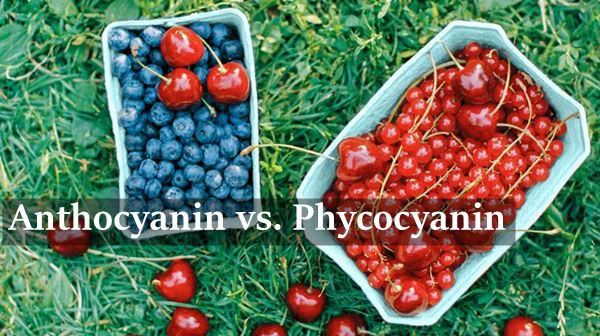
Differences between Anthocyanin and Phycocyanin
1. Chemical Structure
Procyanidins are polyphenols, and anthocyanins are flavonoids. OPC can be produced by heating in acidic medium. Therefore, such polyphenols are named procyanidins.
2. Areas Where
Proanthocyanidins are widely found in the skins, shells and seeds of plants, such as grape seeds, apple skins, peanut skins, and cranberries. Anthocyanins are widely found in blueberries, cherries, strawberries, grapes, blackcurrants, bilberries, etc. Among them, three kinds of purple-red cornflower pigment, orange-red geranium pigment, and blue-purple delphinium pigment are common in nature.
3. Color Difference
Anthocyanin is a water-soluble pigment that is one of the main pigments that make up the color of petals and fruits. It can change color with the acid-base of the cell fluid. If the cell fluid is acidic, it will be reddish, and if the cell fluid is alkaline, it will be bluer. Proanthocyanidins are colorless and are formed by combining various amounts of catechin or epicatechin.
Relationship between Anthocyanin and Phycocyanin
1. Both anthocyanins and OPC are based on three aromatic ring structures. Both are powerful antioxidants. Anthocyanin is a pure natural anti-aging nutritional supplement. Research has proved that it is the most effective antioxidant found by humans today. Its antioxidant properties are fifty times higher than vitamin E and two hundred times higher than vitamin C. It is 100% bioavailable to humans and can be detected in the blood twenty minutes after taking it.
2. Procyanidins can be converted into anthocyanins. Proanthocyanidins need to be broken down into anthocyanins in the human body before they can be absorbed by the human body. Studies have shown that the absorption of proanthocyanidins in the body is only 5%, while anthocyanins can reach about 20%.