


Natural capsaicin is an active ingredient with high content in cayenne pepper, which has pharmacological effects such as antioxidant, anti-tumor, anti-gastrointestinal ulcer, weight loss, and analgesia.
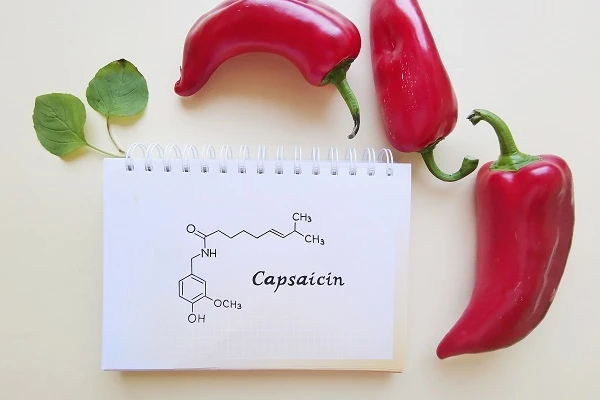
Capsaicin Introduction
Capsaicin, the bioactive substance rich in cayenne peppers, is the most powerful natural compound. It has pungent, painful, and desensitizing sensations. Its structure has an amide bond and a double bond (to the ether). Changes in one or more groups (chain length, branching, etc.) indicate the strength of desensitization.
Capsaicin is an alkaloid synthesized by enzymatic condensation of fruit placenta. It gives the fruit a strong spicy taste. As the fruit ripens, capsaicin begins to increase. The seeds do not produce capsaicin, but they can extract capsaicin from surrounding plant tissue.
Capsaicin Effects
The main source of pepper's pungency is a functional alkaloid component called capsaicin formed in the fruit. Its specific functions are as follows:
1. Capsaicin Antioxidant
Antilipid peroxidation of capsaicin on erythrocyte membranes. Subsequently, the inhibitory effect of capsaicin on lipid peroxidation in mouse liver was further confirmed.
Antioxidative effects are closely related to many diseases. Administration of capsaicin for 4 weeks increases serum lipoprotein resistance to oxidation in adult men and women. The antioxidant properties of capsaicin give it additional advantages in the treatment of cardiovascular disease.
2. Prevention and Treatment of Peptic Ulcer
People with gastrointestinal ulcers should avoid taking hot peppers. But studies have shown that moderate amounts of chili peppers are not the cause of ulcers, but rather beneficial substances. From epidemiological investigations to mechanistic studies, low doses of capsaicin have been shown to prevent and treat gastrointestinal ulcers.
Low-dose capsaicin (< 50 mg/kg) did not stimulate the secretion of acidic substances but inhibited the secretion of acidic substances. It stimulates the secretion of alkaline and gastrointestinal mucosal protective substances and increases gastric mucosal blood flow, preventing the formation and occurrence of ulcers.
3. Cayenne Extract for Pain Relief
The analgesic effect of capsaicin has been widely studied and applied. Topical ointments with capsaicin as the main ingredient are widely used for pain relief in osteoarthritis, rheumatoid arthritis, strains and sprains. Creams made from capsaicin are used to treat psoriasis and are effective in reducing itching and inflammation.
It is currently believed that the molecular mechanism of capsaicin analgesia in vivo is through the capsaicin receptor (TRPV1). The mechanism of analgesic action of topical capsaicin is believed to be that capsaicin can deplete substance P. It can relieve pain by reducing skin sensitivity and defunctionalizing nociceptors.
4. Other Functions
Capsaicin has been reported to have direct and indirect antibacterial effects. It acts as a broad-spectrum antibacterial agent. Antibacterial efficacy in vitro depends on the dose and the species and strain of bacteria.
Numerous studies have shown that capsaicin is a promising antibiotic-independent adjunct option for the treatment of bacterial infections, even those caused by multidrug-resistant strains.
In addition, capsaicin can effectively control metabolic syndrome and its related diseases, such as obesity, dyslipidemia, diabetes and complications, and reduce the risk of death from cardiovascular disease.
Safety and Toxic and Side Effects
Capsaicin is widely used worldwide, but whether it is completely safe for consumption and topical application has been controversial. Although animal studies have shown no or minimal side effects, capsaicin's potent irritant and systemic adverse effects are of concern.
Capsaicin can cause skin irritation. If ingested in large amounts, it can cause nausea, vomiting, abdominal pain, and burning diarrhea. Eye contact can produce severe tearing, pain, conjunctivitis, and blepharospasm. It can cause severe gastritis and diarrhea.
Cayenne pepper is a medicinal and edible plant. Although its main components, capsaicinoids, have extensive pharmacological activities, their safety and toxic and side effects cannot be ignored.