

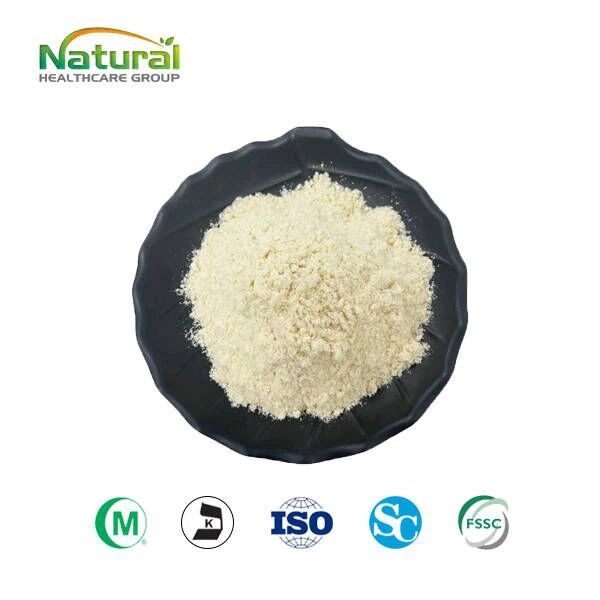
Studies in recent decades have confirmed that Lactobacillus crispatus colonized in the human vagina is the first line of defense of the female genitourinary tract. In the vaginal flora of healthy people, it is the most common beneficial bacterium, and it produces a large amount of Lactic acid is a powerful broad-spectrum bactericide, viricide, and immunomodulator, and can be used as a prebiotic and probiotic to restore vaginal flora.
The growth and metabolism of Lactobacillus can inhibit the growth of pathogenic bacteria related to genitourinary system infection. It has been reported that the acidic substances produced by Lactobacillus crispatus powder in an anaerobic environment can inhibit the growth of Neisseria gonorrhoeae.
It has a strong ability to produce hydrogen peroxide, second only to Lactobacillus jansii. Xu et al. isolated 21 strains of Lactobacillus crispatus from the vaginal secretions of Chinese pregnant women, 90.48% of which can produce hydrogen peroxide, and the strains can be divided into four grades from strong to none, accounting for 19.05%. , 52.38%, 19.05% and 9.52%.
In the direct smear of vaginal secretions, it is in the form of Gram-positive thick bacilli with slightly curved cells that can appear in chains.
The morphology of the colony smears on the culture medium is slightly different from that of the direct smears of the vaginal secretions. It is a Gram-positive elongated bacillus with a large difference in length, curved, slender, no flagella, and no spores.
Lactobacilli (Lactobacilli) are the main components of the normal vaginal microecological flora of women of childbearing age. They inhibit pathogenic microorganisms in the vagina by producing lactic acid, hydrogen peroxide, bacteriocins, and other antimicrobial substances, and maintain the local pH value of the vagina. At a lower level (pH<4.5), the normal physiological environment of the vagina is maintained, while the vaginal flora under pathological conditions is mostly characterized by a decrease in the number of lactobacilli and an increase in the diversity of the flora.
There are more than 20 kinds of Lactobacillus vaginalis reported, and Lactobacillus crispatus (L. crispatus), Lactobacillus gasseri (L. gasseri), Lactobacillus inert (L. iners) and Lactobacillus jensenii (L. jensenii) ) 4 species of Lactobacilli were most commonly distributed in the female vaginal flora.
Lactobacillus crispatus Picture below:
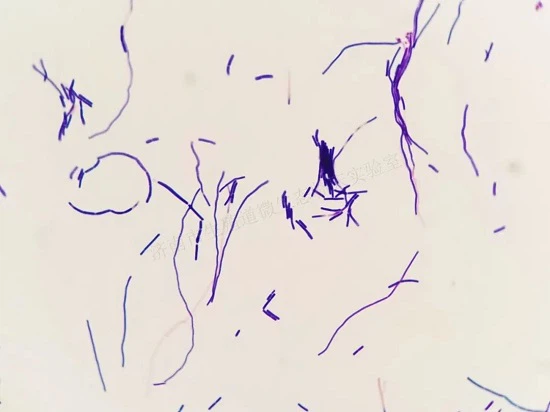
◆Curved, bean-shaped bacilli, rounded at both ends, 0.7-0.9 x 1.0-1.2 microns, in short chains or usually four cells forming a closed ring or horseshoe. No spores. Some strains are motile at first but lose their motility when recultured. Flagella not described.
◆Colonies usually have the same appearance as L. plantarum, but are often smaller.
◆There is no diaminopimelic acid (DAP) in the cell wall (unlike Lactobacillus plantarum); its peptidoglycan is of the L-lysine-D-aspartate type.
◆Homofermentation. Acid is produced from glucose without gas, and the main product is DL-lactic acid.
◆Decompose Escin (98%). Does not grow in 4% taurocholate (unlike L. plantarum).
◆Fermented lactose was variable (41% positive). Acidogenesis was variable in milk (59% negative). Weak or questionable fermentation of starch and turanose.
◆It grows at 15°C and does not grow at 45°C. The optimum temperature range is 30-37°C. The G+C content of DNA was 43.9 mol % (buoyancy density method).
CERTIFICATE OF ANALYSIS:
|
TEST ITEM |
SPECIFICATION |
RESULT |
TEST METHOD |
|
Physical Characteristics |
|
|
|
|
Appearance (Visual) |
White to yellowish powder |
Conform |
QB/T 4575 |
|
Moisture % |
≤5.0 |
3.39 |
GB 5009.3 |
|
Water Activity (aw) |
0.12 |
0.09 |
GB 5009.238 |
|
Heavy Metal Analysis |
|
|
|
|
*Lead (Pb)/ppm |
<0.5 |
0.04 |
GB 5009.12 |
|
*Arsenic (As)/ppm |
<0.5 |
0.24 |
GB 5009.11 |
|
*Cadmium (Cd)/ppm |
<1 |
0.16 |
GB 5009.15 |
|
*Mercury (Hg)/ppm |
<0.1 |
0.01 |
GB 5009.17 |
|
Microbiological Analysis |
|
|
|
|
Viable cell count/CFU/g |
3.0*1011 |
3.5*1011 |
ISO 7889 |
|
Coliform/CFU/g |
<10 |
<10 |
GB 4789.3 |
|
Yeast & Mold/CFU/g |
<50 |
<10 |
GB 4789.15 |
|
*Escherichia coli/CFU/g |
Negative in 25g |
Negative in 25g |
GB 4789.38 |
|
*Salmonella |
Negative in 25g |
Negative in 25g |
GB 4789.4 |
|
*Staphylococcus aureus |
Negative in 25g |
Negative in 25g |
GB 4789.10 |
|
*Shigella |
Negative in 25g |
Negative in 25g |
GB 4789.5 |
What’s the Key Function of Lactobacillus crispatus powder?
1. Lactobacillus crispatus promotes a healthy vaginal microbiota, which is essential for sustaining vaginal health. It aids in maintaining the vagina's acidic pH, which produces an unfavorable environment for the growth of dangerous bacteria and yeast. This can aid in the prevention of vaginal infections including yeast and bacterial vaginosis.
2. Natural Defense Mechanism: The lactic acid and hydrogen peroxide produced by Lactobacillus crispatus make the environment for pathogenic germs acidic and unfriendly. This built-in defensive system helps keep dangerous bacteria, viruses, and fungi from colonizing and growing in the vaginal region.
3. Maintaining Microbial Balance: it helps to the overall balance of the microbial environment by being present in the vaginal microbiota. It promotes the growth of healthy bacteria and reduces the occurrence of opportunistic diseases.
4. Maintaining Microbial Balance: it helps to the overall balance of the microbial environment by being present in the vaginal microbiota. It fosters a varied and healthy community of microorganisms by assisting in the inhibition of the expansion of opportunistic pathogens and fostering the creation of additional beneficial bacteria.
5. Protection against Sexually Transmitted Infections (STIs): According to some studies, it may aid in protecting against some STIs, such as Chlamydia trachomatis and the human papillomavirus (HPV). To completely grasp its precise function in preventing STIs, more research is necessary.
6. Support During Pregnancy: Lactobacillus crispatus powder is crucial for maintaining vaginal health and microbial balance during pregnancy. Reduced risk of preterm birth and other issues can be attributed to a healthy vaginal flora.
What is our advantage?

1. Currently, we have two factories. A GMP implementation standard factory with a 100,000-level purification workshop, and a fine processing workshop covering an area of 400 square meters.
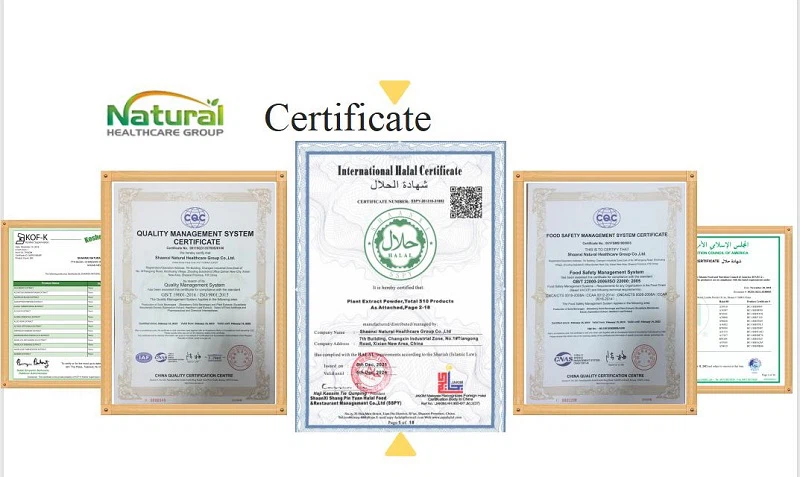
2. Now we have Halal/kosher/SC/ISO9001/ISO22000 certificate
3. The professional team will provide you with perfect after-sales service.
4. Professional laboratories provide you with various tests.
5. Customize production for customers according to customers' quality and price of products.
What we can do for you?
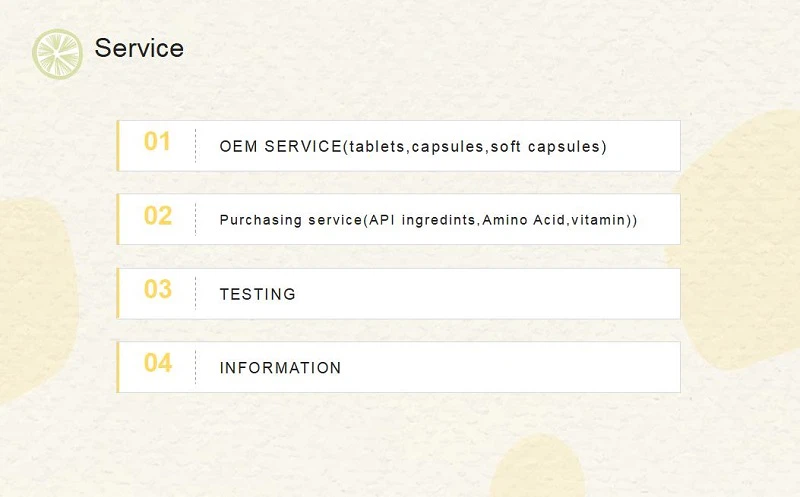
1.OEM SERVICE(tablets, capsules soft capsules)
2.Purchasing service(API IngredInts, Amino Acid,vitamIn))
3. TESTING
4. INFORMATION.
How to contact you?
|
Sales Market: |
Email: sales@dnbiology.com |
|
|
President's Office |
Email: info@dnbiology.com |
Hot Tags: lactobacillus crispatus powder, China lactobacillus crispatus powder suppliers, manufacturers, factory, Vitamin B2 Riboflavin , D Alpha Tocopheryl Acetate Powder, Vitamin E Liquid Form 2074 53 5, Cyanocobalamin Powder, Folic Acid Powder, D alpha Tocopherol Oil